

How Long Before Maggots Appear On A Dead Animal
It'southward that fourth dimension of the year when skeletons, skulls and basic have found their style onto cookies, porches and storefront windows.
While skeletons are universally considered symbols of death, the process of turning a newly dead animal into a bony skeleton relies on an explosion of life that ushers in the process of decomposition. Much of this transformative procedure is performed by wriggling, scuttling, scurrying insects.
Through decades of careful observation and experimentation, entomologists accept described a 5-phase model of decomposition. This model explains how insects, in close collaboration with microorganisms, transform a warm body into a pile of bones while simultaneously recycling carbon, nitrogen, phosphorous and numerous other nutrients and then that other living things may abound and thrive.
Information technology begins with a corpse
The first stage of decomposition (termed "the fresh stage") occurs between the moment of decease and the offset signs of bloat. Within this flow in that location are no outward signs of physical change, only bacteria already living within the carcass begin to digest tissues within the body.
Insects start arriving in the minutes to hours after the animal has died. Most insects colonizing during this initial menses are flies from the Calliphoridae (blowflies), Muscidae (house flies) and Sarcophagidae (flesh flies) families.
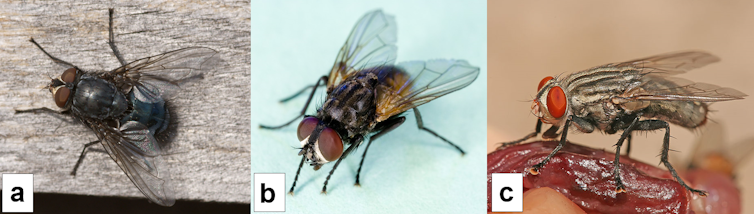
These early flies seek out prime existent manor to deposit their eggs. This is generally limited to the animal'southward natural cavities (eastward.k. nostrils or mouth), or inside any external injuries (due east.k. abrasions). The moisture levels and soft tissue within these areas makes an ideal nursery habitat for young maggots to develop.
Bloat, maggots and marsh gas
Bloat comes next. In this 2nd stage of decomposition, the lack of oxygen within the trunk begins to favour anaerobic microbes. These bacteria thrive in the absence of oxygen within the trunk.
As the bacteria begin expelling gases like hydrogen sulphide and methane, the abdomen begins to peachy. The carcass begins to darken and smells foul. Because carcasses are an uncommon and short-lived source of nutrients, numerous insects may detect and travel to a carcass from kilometres away.
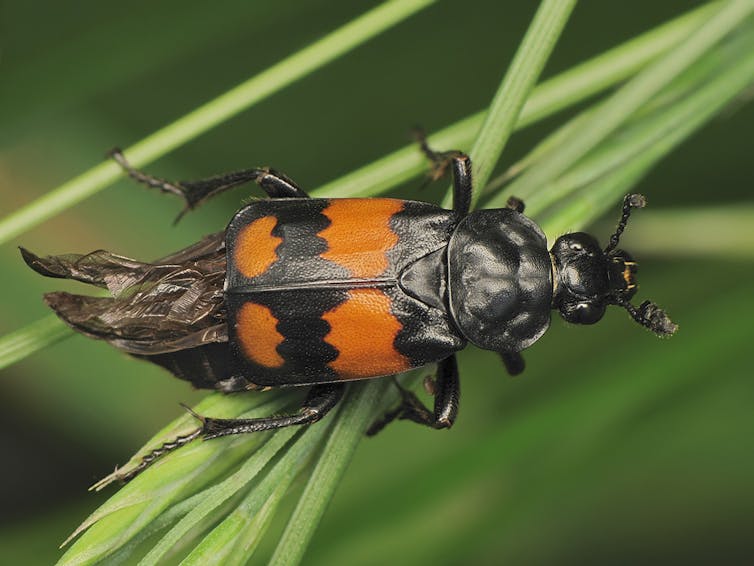
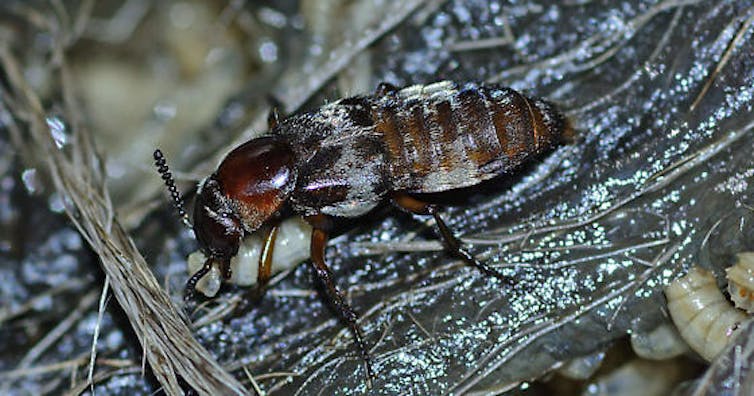
During the bloating stage, fly eggs hatch and big quantities of maggots begin to feed on the flesh. At this point, beetles join in on the feeding frenzy. Some beetles, such as feces beetles, will feed on the nutrient-rich flesh of the carcass. Predaceous beetles, such every bit rove beetles and clown beetles, arrive to feed on the maggots.
Maggots work their magic
The third stage is known as "agile decay." This phase begins when the carcass starts to slowly debunk, a process akin to a tire pierced by a blast. Larval insects gnaw modest holes into the body cavities, allowing gases to escape.
Tissues begin to liquefy, giving the carcass a wet appearance, followed by the release of a putrid scent. By the end of the active decay phase, maggots concentrate their feeding within the breast crenel of the animal. Shortly beetles boss, with huge huge numbers of rove beetles and clown beetles arriving to chow downward on the maggots.
Once most of the flesh has been eaten away, the carcass enters the phase of advanced decay. The putrid odour of the carcass begins to subside and well-nigh maggots leave the carcass to pupate in the underlying soil.
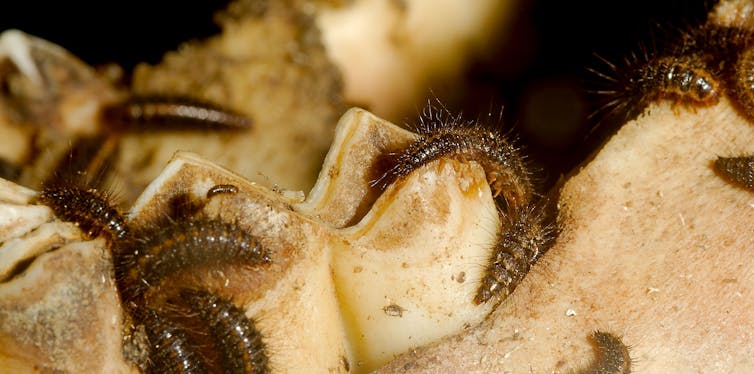
Next, adult dermestid beetles arrive at the carcass and brainstorm laying eggs. Dermestid beetles — small round beetles covered in tiny scales — are scavengers that feed on a variety of dry materials: fur, feathers, dead plants, even carpets! If they're non familiar to you, possibly you haven't looked closely enough — a 2016 survey of arthropods in homes detected dermestid beetles in 100 per cent of households.
Dermestid beetles finish the job
The final stage of decomposition is known as dry decay. Very few adult flies are attracted to the carcass at this phase. During dry decay, the carcass is reduced to basic, cartilage, dried skin and pilus. By this stage there is little odour at all.
Larval dermestid beetles continue to clean the skeleton, leaving behind remains that wait very similar to a disassembled skeleton. Dermestid beetles are and then constructive in cleaning bones, in fact, that they are regularly used by museums when preparing skeletons for collection and display.
The piddling things that run the world
While witnessing this beastly undertaking is not for those with dainty stomachs, decomposition of animal remains is a fundamental process that cycles nutrients within ecosystems.
Nutrients like carbon (the footing of all life on Earth), phosphorous and nitrogen, which all living things demand to grow, are in express supply in ecosystems. They must be constantly reused and recycled to ensure the continuation of life.
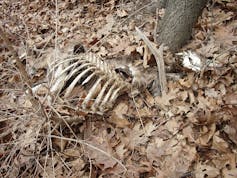
Following decomposition, the soil beneath the cadaver volition contain a high concentration of nutrients relative to the surrounding ecosystem.
However, the nutrients released into the surroundings don't all stay in soil and plants. Nutrients and energy contained inside the dead animal (whether a mouse, raccoon or crow) are repurposed and repackaged into living, animate insects.
When these insects complete feeding on a carcass, they disperse into the wider environs where they continue to be productive members of ecosystems. These very aforementioned insects assistance pollinate our crops (including pumpkins), fill the bellies of insect-eating animals (such equally bats) and are crucial to the decomposition of other expressionless organisms (like rats, toadstools and snakes).
If yous happen to stumble across animal basic this Halloween season, or any other time of the year — take a moment to consider the beastly drama that fabricated this discovery possible.
Source: https://theconversation.com/life-after-death-how-insects-rise-from-the-dead-and-transform-corpses-into-skeletons-148847
Posted by: tedrowagainto.blogspot.com
0 Response to "How Long Before Maggots Appear On A Dead Animal"
Post a Comment